Turn an anonymous visitor into structured attribution data.
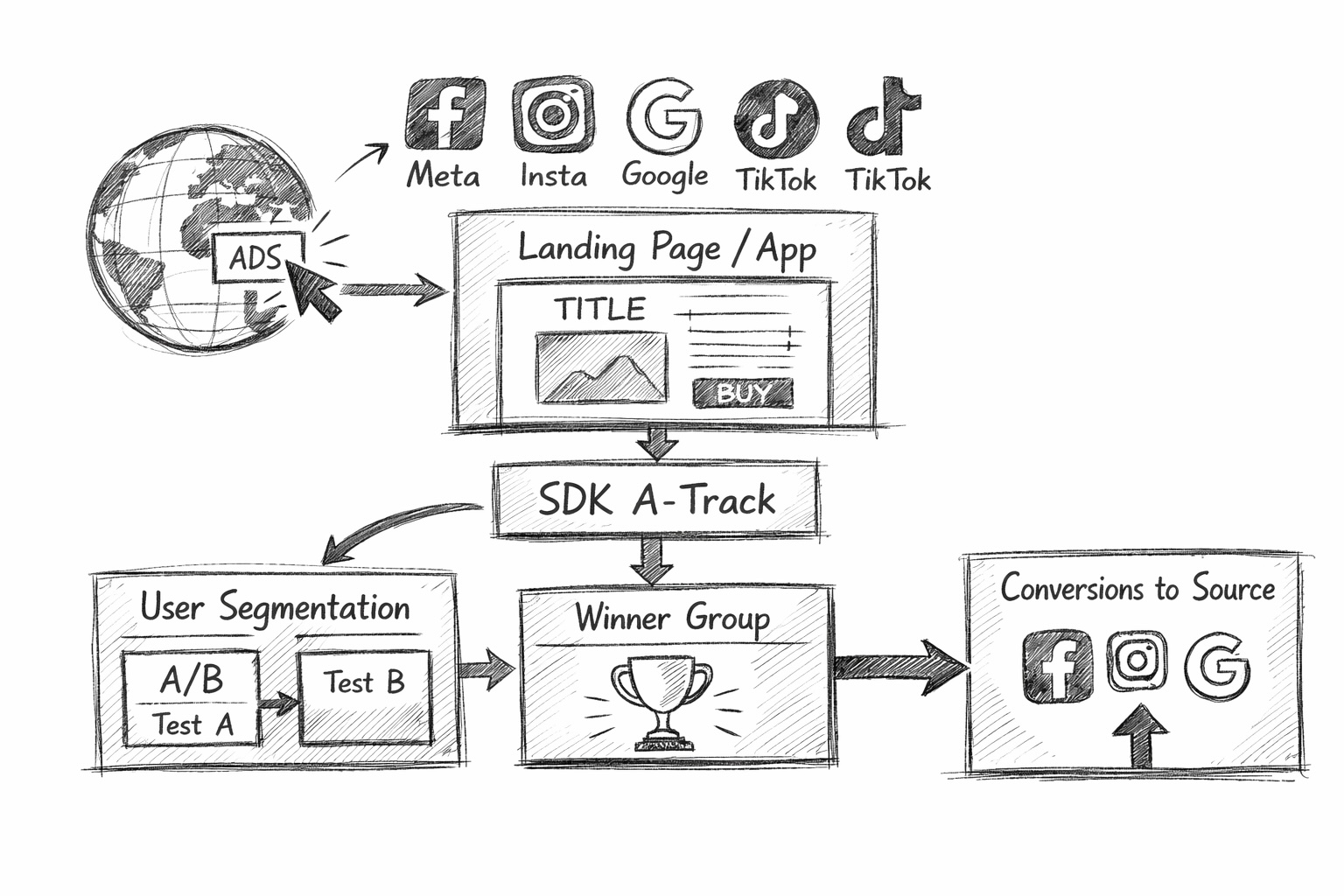
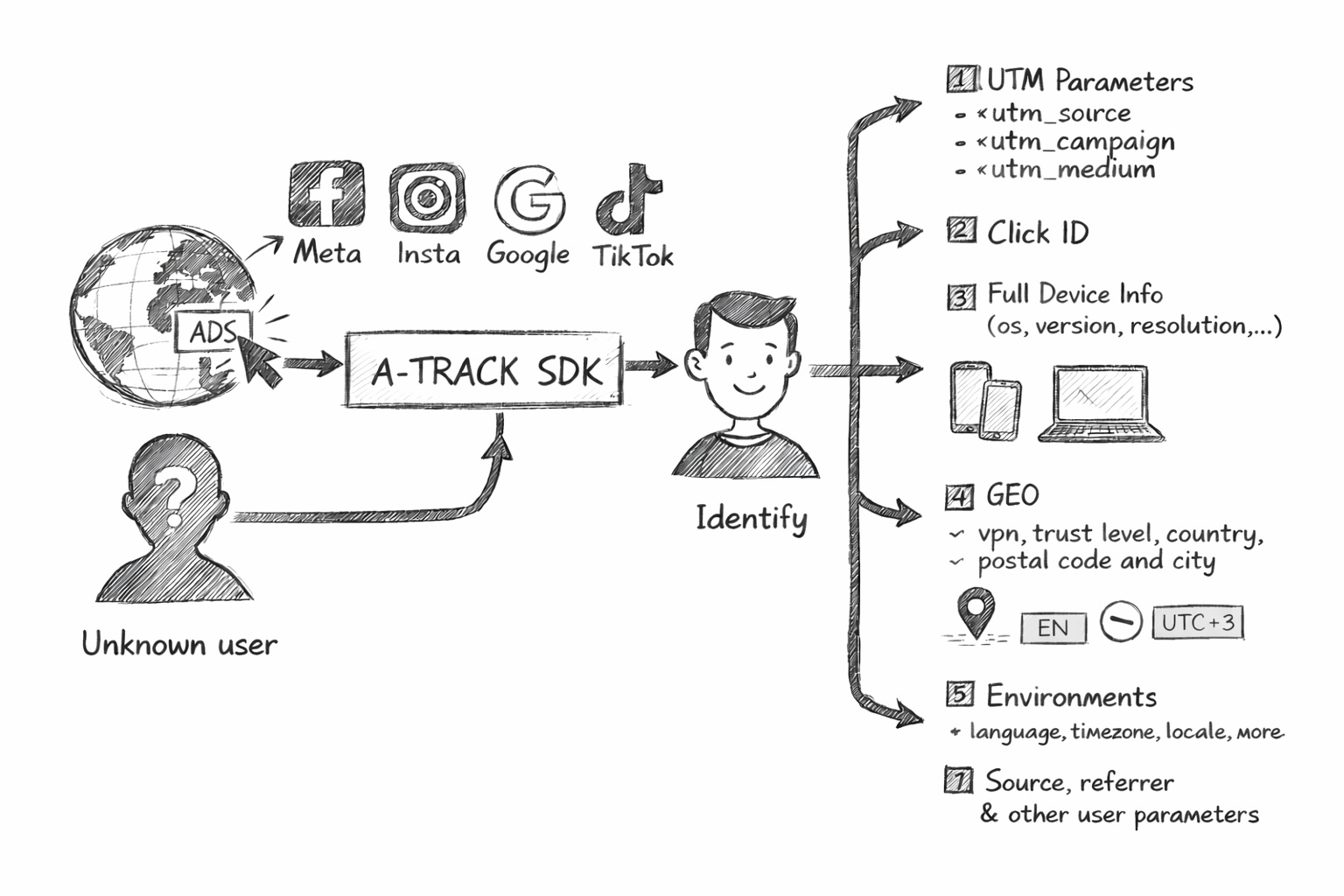
Send a single SDK init call, capture landing context, client signals, click IDs, geo, and device data, then return the full profile to your stack.
What We provide
The best attribution data, ready to use
Traffic Source Parsing
Capture where a user came from and turn referrers, UTM tags, campaigns, and landing URLs into structured data.
Raw Acquisition Data
Return the original signals alongside parsed fields so your product can store, analyze, and reuse the raw marketing data.
Client Context Capture
Collect browser, device, locale, viewport, timezone, referrer, and runtime context automatically on the client.
Identity Resolution
Start anonymous, generate a UUID automatically, and keep all future events linked to that user across the full lifecycle.
Realtime Event Ingestion
Ingest user events with consistent payloads from frontend and backend SDKs, then associate them with the right UUID.
Parsed Attribution Output
Normalize incoming traffic data into clean fields your application can use immediately without extra transformation code.
SSR and Backend Ready
Pass server-known values like IP address, user agent, and referer from Node, Python, Go, Rust, PHP, Swift, .NET, and more.
Raw Data Back to You
Send data in, let A-TRACK parse and enrich it, then return the raw structured output so you can power your own attribution logic.
Anonymous visitor, fully resolved into a usable profile.
This session started on /pricing from Google paid search, landed with campaign data attached, and was enriched into a complete user context in a single init call.
Acquisition
Source: Google
Campaign: Spring Launch
Ad set: Audience A
Ad: Creative 1
Keyword: analytics sdk
Location
Orlando, Florida, United States
ZIP: 32835
Timezone: America/New_York
ISP: Spectrum
ASN Org: BHN-33363
Device
Apple iPhone
iOS 17.2
Mobile Safari 17.2
393×852 viewport
1179×2556 screen, 3x pixel ratio
Signals Captured
gclid, fbclid, fbc, wbraid, msclkid, ttclid, clickid
Locale: en-US
Connection: wifi / 4g
Touch points: 5
Profile State
UUID: b19412c6-6a91-4e18-890d-e2269a0d1249
Plan: pro
Signup step: landing
Source URL: partner.example.com/blog/first-touch
Custom context: landing_variant=v2, widget_position=hero
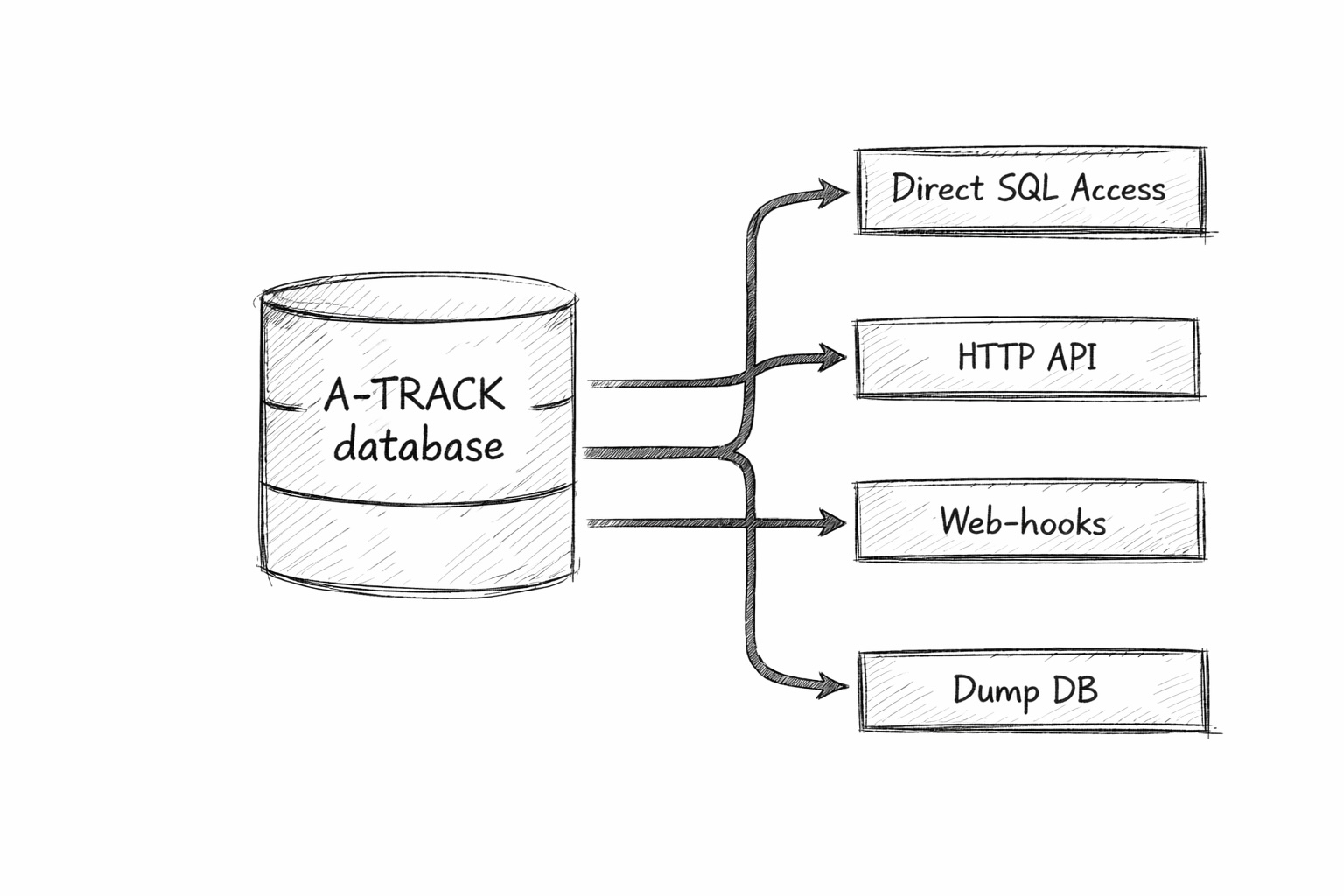
Easy access to your data
Easy access to your data
A-TRACK does not lock your attribution data inside one dashboard. We deliver structured output back to your stack through APIs, SQL access, backup files, and real-time webhooks.
REST API Access
Query user attribution, raw payloads, and parsed traffic data directly from your backend or internal tools.
SQL Database Access
Work with attribution records in SQL for analytics, joins, internal reporting, and custom data pipelines.
Backup Files
Export snapshots or scheduled backup files so your team always has a portable copy of collected raw and parsed data.
Webhooks
Push enriched user and event data to your systems in real time whenever new attribution signals are captured.
Pricing
Simple plans for attribution workloads
PERSONAL
$25
Per Month- 1 vCPU / 1 GB RAM
- Storage minimum: 10 GiB
- Connection limit: 50
- 10,000 requests daily
- Geolocation Data
- Commercial Blocklists
- ASN Data
- Company Data
- VPN Detection
- ML IP Reputation Scores
- Data Downloads
- 99.999% uptime SLA
STARTUP
$49
Per Month- 2 vCPU / 4 GB RAM
- Database size: 50 GiB
- Connection limit: 150
- 50,000 requests daily
- Geolocation Data
- Commercial Blocklists
- ASN Data
- Company Data
- VPN Detection
- ML IP Reputation Scores
- Data Downloads
- 99.999% uptime SLA
PRO
$120
Per Month- 4 vCPU / 8 GB RAM
- Database size: 150 GiB
- Connection limit: 300
- 100,000 requests daily
- Geolocation Data
- Commercial Blocklists
- ASN Data
- Company Data
- VPN Detection
- ML IP Reputation Scores
- Data Downloads
- 99.999% uptime SLA
Own your attribution data from first touch to export.
Capture traffic source signals, normalize them into structured fields, and get raw outputs back through the delivery channel that fits your stack.
API, SQL, backups, and webhooks from one ingestion pipeline